 Футбол
  Бокс
Бокс  Наш телеграм


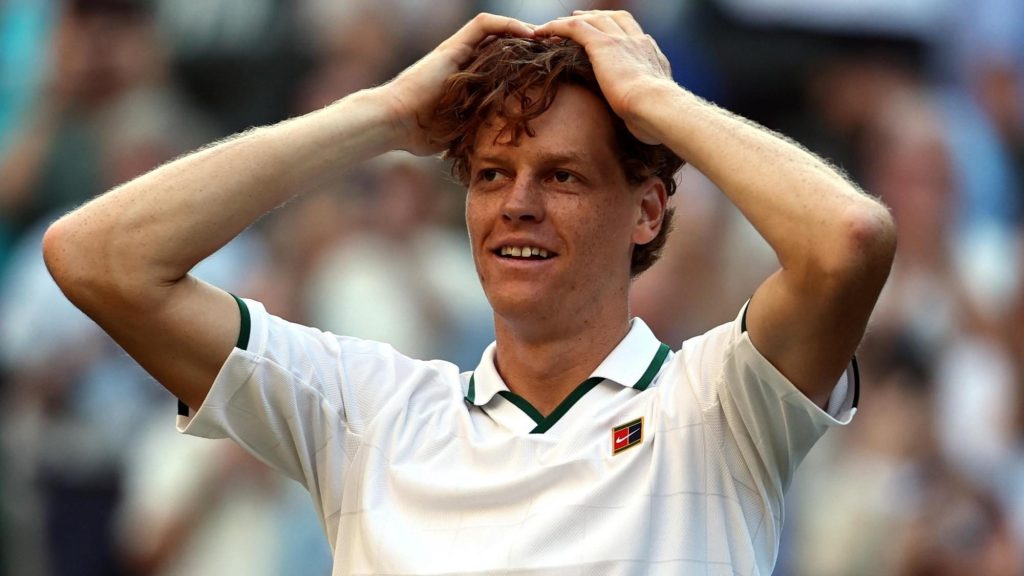


Alexander Zverev came out firing in the opening set. His first serve clocked above 130 mph and landed with precision. He won 81 percent of points on his first serve and 9 of 11 on his second. Jannik Sinner, meanwhile, stood more than two meters behind the baseline on over half his returns, and it showed—he forced 20 errors from Zverev, who contributed 15 unforced errors of his own, ten on the forehand. The set went to a tiebreak. Sinner took it 7-5.
The second set played out much the same way. Zverev held steady at 83 percent serve efficiency and won 70 percent of his first-serve points heading into yet another tiebreak. But in that tiebreak, Sinner changed his approach. He moved inside the baseline, hitting five returns from less than two meters back and winning four of those five points. He took the set 7-6(2).
The turning point came in the third set. In the seventh game, Zverev chased a drop shot, slipped, and hyperextended his right knee. After that injury, his movement suffered noticeably. Sinner won the third set 6-3, then closed out the fourth 6-4. The opening three sets had already consumed three hours and 35 games.
Final score: Sinner 6-7(7), 7-6(2), 6-3, 6-4. His second consecutive Wimbledon title, his fifth Grand Slam singles title overall. Both finalists were top seeds—Sinner at No. 1, Zverev at No. 2.
For Zverev, 29, the loss carried heavy weight. This was his first Wimbledon final, after never reaching the quarterfinals before this year. He’d made the French Open final in 2026 against Flavio Cobolli, so a Wimbledon win would have handed him the Channel Slam. Instead, he drops to world No. 2, behind Sinner and above Carlos Alcaraz.
The victory underscores Sinner’s dominance. Zverev has now lost to him nine times in a row. Sinner has never won a match longer than three hours and 50 minutes; he stayed within that mark despite the opening set’s length.